
With rising credit demand, cleaner balance sheets, and renewed investor confidence, banks are positioned at the forefront of the market rally. From major players like ICICI and HDFC to broader policy shifts, there's much driving this momentum.

In the Sensex pack, Mahindra & Mahindra tanked over 6 per cent after the company cut the prices of its SUV models to boost demand. Mahindra & Mahindra said its XUV700's fully-loaded AX7 range now starts at Rs 19.49 lakh, a price cut of over Rs 2 lakh. Tata Steel, Tata Consultancy Services, HCL Technologies, State Bank of India, JSW Steel, Tata Motors and Kotak Mahindra Bank were other losers.

The Reserve Bank of India (RBI) abstained from selling any US dollars throughout February, for the first time in nine months. The decision comes amid increasing pressure on the rupee, as expectations of rate cuts by the US Federal Reserve keep pushing back. The last time the RBI did not sell dollar over a month was in May 2023.

Foreign investors were net sellers of domestic debt in October for the first time since the official inclusion of Indian government bonds in the JP Morgan bond indices, with net outflow worth Rs 4,697 crore. This marked the second instance in the current calendar year where foreign portfolio investors (FPIs) were net sellers in a month.

The Supreme Court of India has ruled that governors cannot indefinitely delay giving assent to bills passed by state legislatures, setting a timeline of one to three months for their actions. The court said the governor must act "as soon as possible" and that failure to comply with the timeline will make their inaction subject to judicial review. The ruling comes as several opposition-ruled states have accused governors of delaying assent to bills passed by their assemblies.

One hundred years ago, a group of 10 revolutionaries carried out an operation that shook the British Empire. Utkarsh Mishra revisits the 'Kakori Conspiracy Case', a turning point in the armed struggle for independence.

After a brutal selloff since October, foreign portfolio investor (FPI) flows for the year-to-date (YTD) in 2024 have turned negative. In early September, YTD FPI investments peaked at a record Rs 22,000 crore ($2.6 billion). This wave of selling has also pulled down benchmark indices, with the Nifty's YTD returns declining to 11 per cent from their high of 21 per cent in September.

After an extremely stable 2023, the Indian rupee started 2024 on a promising note and has turned out to be the best-performing Asian currency so far in January, appreciating 0.1 per cent despite 2 per cent rise in the dollar index. All other Asian currencies depreciated by around 1.4-4 per cent during the month. The local currency regained its ground against the greenback on the back of foreign portfolio inflows, said market participants.

Delay in the tapering of the $85 billion-a-month bond buyback programme by the US Fed (tapering will start from January 1) gave the country time to replenish the forex reserves and rein in the high current account gap.

The US Federal Reserve's interest rate decision is the biggest event that would drive sentiments in the domestic stock market this week, besides a host of macroeconomic data from the global front and trading activity of foreign investors, analysts said. The Indian equity market had an exceptional last week, with both the Nifty and Sensex hitting their all-time high levels on Thursday.

Movement in the equity market this week will be guided by a host of macroeconomic data announcements, global trends and trading activity of foreign investors, analysts said. Stocks markets concluded the last week on a subdued note, as investors grappled with global uncertainties.

'Maharashtrians are facing a dual battle -- numerical battle with North Indians and financial battle with Gujaratis and Marwaris.' 'This has created anxiety about survival and ownership over Mumbai and Maharashtra.'

The Supreme Court of India has ordered a progressive reduction in the deputation of Indian Police Service (IPS) officers to Central Armed Police Forces (CAPFs) over the next two years, citing concerns over the delayed promotions of cadre officers. The court's decision aims to address the long-standing grievances of CAPF officers who feel their promotional prospects are hampered by the presence of IPS officers in higher ranks. The ruling also mandates a cadre review of the CAPFs to be completed within six months, addressing the issue of stagnation in the service hierarchy. The court's decision acknowledges the valuable contributions of CAPF officers while also recognizing the need to balance their promotional prospects with the operational requirements of the forces.

The US Fed has also retained its benchmark rates for the Federal funds in the range of zero to 0.25 per cent, as part of its efforts to help in boosting the economy. After its two-day monetary policy meeting, which ended on Wednesday, the Fed said that 'economic activity is leveling out'.

The US Federal Reserve's interest rate decision, global cues, macroeconomic data announcements and the ongoing quarterly earnings are the major triggers that will dictate trends in stock markets this week, analysts said. Besides, the trading activity of foreign investors and the movement of global oil benchmark Brent crude will also be tracked. "All eyes are on the outcome of the US Federal Reserve meeting scheduled for November 1, particularly due to the multi-year high levels of the US bond yields.

From the Sensex basket, Sun Pharma, Maruti, IndusInd Bank, Titan, ITC, Tata Motors, Larsen & Toubro and JSW Steel were the major gainers. On the other hand, Infosys, Wipro, HCL Technologies, Tata Consultancy Services, Tech Mahindra and Bajaj Finserv were among the laggards.

From the Sensex basket, NTPC, Power Grid, IndusInd Bank, Tata Steel, Tata Motors, JSW Steel, Tech Mahindra and Larsen & Toubro were the biggest gainers. Bharti Airtel, Maruti, ICICI Bank and Asian Paints were the laggards.

The Indian rupee is likely to depreciate further against the US dollar through the end of 2024. This is due to the continued strengthening of the greenback, combined with the weakening of the Chinese yuan, which is expected to keep pressure on the Indian currency.
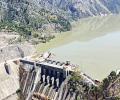
Pakistan has halted the construction of contentious canals in Punjab province after India suspended the Indus Waters Treaty following a deadly terrorist attack in Kashmir. The decision to suspend the canals project was made after Prime Minister Shehbaz Sharif met with PPP chairman Bilawal Bhutto-Zardari and agreed to address the concerns of Sindh province, where the project had sparked protests. The canals project, aimed at irrigating the desert region in Punjab, was seen as a threat to water resources in Sindh. Both sides have agreed to seek consensus on the issue in the Council of Common Interests (CCI), a high-powered inter-provincial body. Meanwhile, Pakistan has reiterated the importance of the Indus Water Treaty for its water security and economy, and condemned India's move to suspend it.

The week's losses wiped out investor wealth worth Rs 18.43 trillion, with the total market capitalisation of BSE-listed firms now at Rs 441 trillion.

Investor wealth eroded by Rs 4.46 lakh crore in a single day on Friday with the benchmark BSE Sensex tanking more than 1 per cent in line with global stocks rout. The 30-share BSE Sensex plunged 885.60 points or 1.08 per cent to close at 80,981.95 with 25 of its components declining and five ending with gains. During the day, it nosedived 998.64 points or 1.21 per cent to hit an intra-day low of 80,868.91.

The recent depreciation of the rupee along with sharp fall in the country's foreign exchange (FX) reserves has sparked a debate whether stability of the exchange rate is necessary and desirable. The rupee was one of the least volatile currencies among peers for almost two years before the current downward pressure started in September after the US Federal Reserve lowered interest rate.

Investors' wealth eroded by more than Rs 2.21 lakh crore in early trade on Wednesday, with the market witnessing a selling-off amid prospects of aggressive rate hikes by the US Federal Reserve to tackle high inflation, and sluggish global trends. In less than an hour of the start of trading on Wednesday, the key indices -- Sensex and Nifty -- were deep in the red and witnessed significant volatility, reflecting jittery investor sentiments. The market capitalisation of BSE-listed companies, which is also an indicator of wealth of investors, tumbled more than Rs 2.21 lakh crore to Rs 2,84,49,727.56 crore amid the 30-share Sensex falling 564.76 points to 60,006.32 points.

Special Judge M K Nagpal reserved the order after hearing arguments on his application seeking relief claiming his custody is no longer required for investigation.

Stock market investors became richer by a whopping Rs 77.66 lakh crore in 2024, helped by an overall optimistic trend in equities, where the BSE Sensex surged over 8 per cent. Analysts said the year witnessed a tug of war between the bulls and bears marked by volatility but, despite the uncertainties around the world, the Indian markets sustained the pressure and delivered impressive returns.

Government employees in Bangladesh locked down the main gate of the Bangladesh Secretariat in Dhaka, protesting a new service law that allows for easier dismissal of officials for misconduct. The protest, which lasted for about half an hour, disrupted government operations. The employees also threatened to continue their protests until the ordinance was scrapped. Meanwhile, the protest by employees of the Dhaka South City Corporation, demanding the installation of BNP leader Ishraque Hossain as its mayor, has brought administrative services to a halt. These protests, coupled with concerns raised by the business community and the military, highlight a growing sense of unease in Bangladesh over the policies of the interim government.

The Enforcement Directorate (ED) has seized Rs 1.5 crore in cash from the premises of a chit fund company owned by Gokulam Gopalan, one of the producers of the Malayalam movie "L2: Empuraan", in connection with foreign exchange law violations. The searches were conducted at locations in Kozhikode, Kerala and Chennai, Tamil Nadu. The ED alleged that the company collected subscription to chit funds from persons residing outside India without due permission and violated regulations framed by the Reserve Bank of India (RBI).

Foreign investors have poured Rs 57,359 crore into Indian equities in September, making it the highest inflow in nine months, mainly driven by a rate cut by the US Federal Reserve. With this infusion, foreign portfolio investors' (FPIs) investment in equities has surpassed the Rs 1 lakh crore mark in 2024, data with the depositories showed. Going ahead, FPI inflows are likely to remain robust, driven by global interest rate easing and India's strong fundamentals.

The Enforcement Directorate on Monday said it has issued a Rs 611 crore show cause notice to Paytm's parent company and linked entities for "contravention" of the FEMA on various counts.

Equity benchmark indices Sensex and Nifty hit their fresh record levels on Thursday after lower inflation numbers raised hopes of an interest rate cut by the RBI. Besides, heavy buying in capital goods, consumer durable and industrial stocks also helped the indices, traders said. Retail inflation continued its downward slide to reach a one-year low of 4.75 per cent in May due to a marginal decline of prices in the food basket and remained within the Reserve Bank's comfort zone of below 6 per cent, according to government data released on Wednesday.

Among the Sensex constituents, 18 stocks closed in negative with UltraTech Cement, L&T, Bharti Airtel, Bajaj Finance and Tech Mahindra being major laggards. Other heavyweights like Asian Paints, Maruti, Titan and JSW Steel also saw heavy selling. In contrast, Kotak Mahindra Bank, Bajaj Finserve, HDFC Bank, ITC and SBI bucked the trend and ended the session with a gain of up to 2.09 per cent.

Equity investors will track the trading activity of foreign investors, global trends and ongoing earnings results for further cues, and benchmark indices may continue to witness consolidation in a holiday-shortened week amid the monthly derivatives expiry, analysts said. Markets fell sharply last week amid massive foreign capital outflows and dismal Q2 earnings so far. Weakness in the markets might continue in the near term amid cautiousness among investors ahead of the US presidential election early next month, an expert said.

Indian Olympic Association (IOA) President PT Usha has proposed that only disciplines featuring in the Olympics, Commonwealth and Asian Games be considered for inclusion in the future National Games,

A group of people staged a protest on Wednesday against alleged "caste discrimination" at the Indian Institute of Management-Bengaluru (IIM-B), demanding the removal of its director. However, IIM Bangalore denied the allegations made by the protesters.

Among the Sensex firms, Tech Mahindra, Tata Motors, Infosys, Wipro, Tata Steel, Tata Consultancy Services, Reliance Industries and Axis Bank were the major gainers. Bajaj Finance, IndusInd Bank and Power Grid were the laggards.

'Despite the current uncertainties, the long-term outlook remains constructive due to strong fundamentals, government initiatives, and a stable banking sector.'

'India's fundamentals are a lot better (than those of other emerging market economies).' 'India will suffer (witness a fall in its stock market) what I call the second order effect.' 'And the second order will happen when these funds (belonging to macro and hedge fund investors and which have leveraged Japanese yen-carry trades), because they lose money elsewhere as lot of their positions were financed by borrowing Japanese yen, will have to book profits in investment destinations where they are making money, including in markets like India.' 'They (these investors) will have to effectively sell in countries like India and which is the consequence (the crash in equity markets) that Indian markets might see.'

Foreign portfolio investors' (FPIs') net investments in the domestic debt market surged in December, marking a 77-month high, that is, since July 2017. According to market participants, this significant uptick in FPI inflows can be attributed to the post-domestic policy outcome and the US Federal Reserve's dovish stance at the December policy. FPI inflows into debt stood at Rs 18,393 crore in December against Rs 14,106 crore in November, according to data on the National Securities Depository Limited.

In the backdrop of an over four-decade high inflation, the US Federal Open Market Committee has raised its key policy interest rate by 75 basis points to 2.25-2.50 per cent, anticipating that the increase in the interest rates will be "appropriate". Hiking interest rates typically cool demand in the economy, thereby putting a brake on the inflation rate. The US Federal Reserve in its June meeting too raised the interest rate by 75 basis points, which was the steepest hike since 1994.

'Investors with foreign currency-denominated goals, such as foreign education or foreign travel, should go for US equity funds.'
